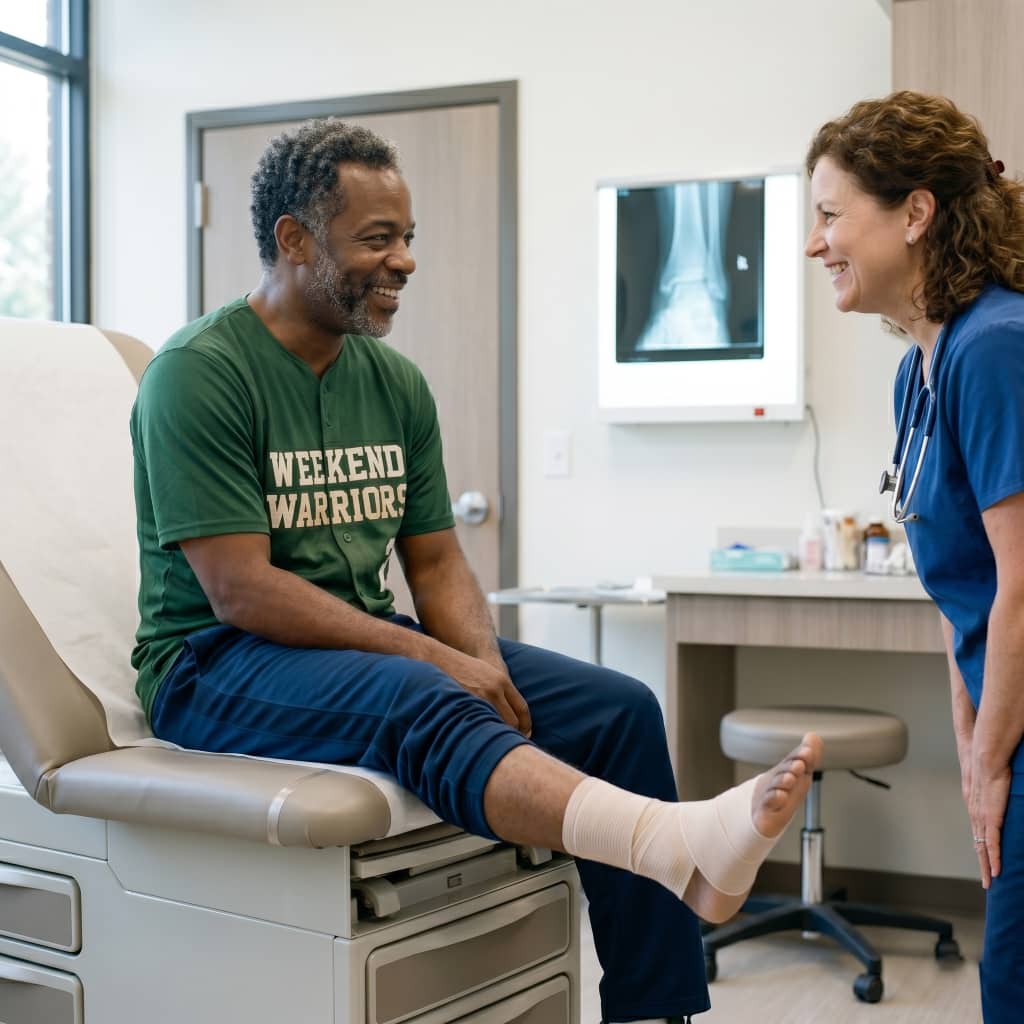

You went for the game-winning catch in the neighborhood kickball game or took a misstep on a trail hike, and now your ankle is twice its normal size. In the heat of the moment, it’s hard to know: is it just a twist, or did something actually snap?
Summer invites us all to be more active, but our muscles and ligaments aren’t always prepared for the sudden increase in intensity. Minor orthopedic injuries, such as sprains (stretching or tearing of ligaments) and strains (injuries to muscles or tendons), are incredibly common this time of year. Even so, while they might feel similar, a sprain usually involves the “stabilizers” of your joints. In contrast, a strain is an injury to the “movers” of your body.
When an injury occurs, the body’s immediate response is inflammation. This leads to the classic symptoms of swelling, bruising, and a limited range of motion. While many people assume they can simply “walk it off,” improper management of a soft tissue injury can lead to chronic instability or long-term pain. Therefore, understanding the mechanism of your injury—how you fell or twisted—is the first step in determining the severity of the damage.
At-home care typically begins with the R.I.C.E. method (Rest, Ice, Compression, and Elevation), but the challenge lies in knowing when that isn’t enough. Minor fractures can often mimic the symptoms of a severe sprain. Without professional evaluation, a small break could heal incorrectly. This may lead to complications down the road.
Our team can help you quickly differentiate between an injury that needs ice and rest or one that requires imaging or even a surgical consult. We use our clinical expertise and on-site X-ray diagnostics to ensure you aren’t spending hours in a hospital waiting room. After all, this is a condition we can expertly manage right here. If you need a splint or immobilization to get you to the next appointment we’ve got you covered.