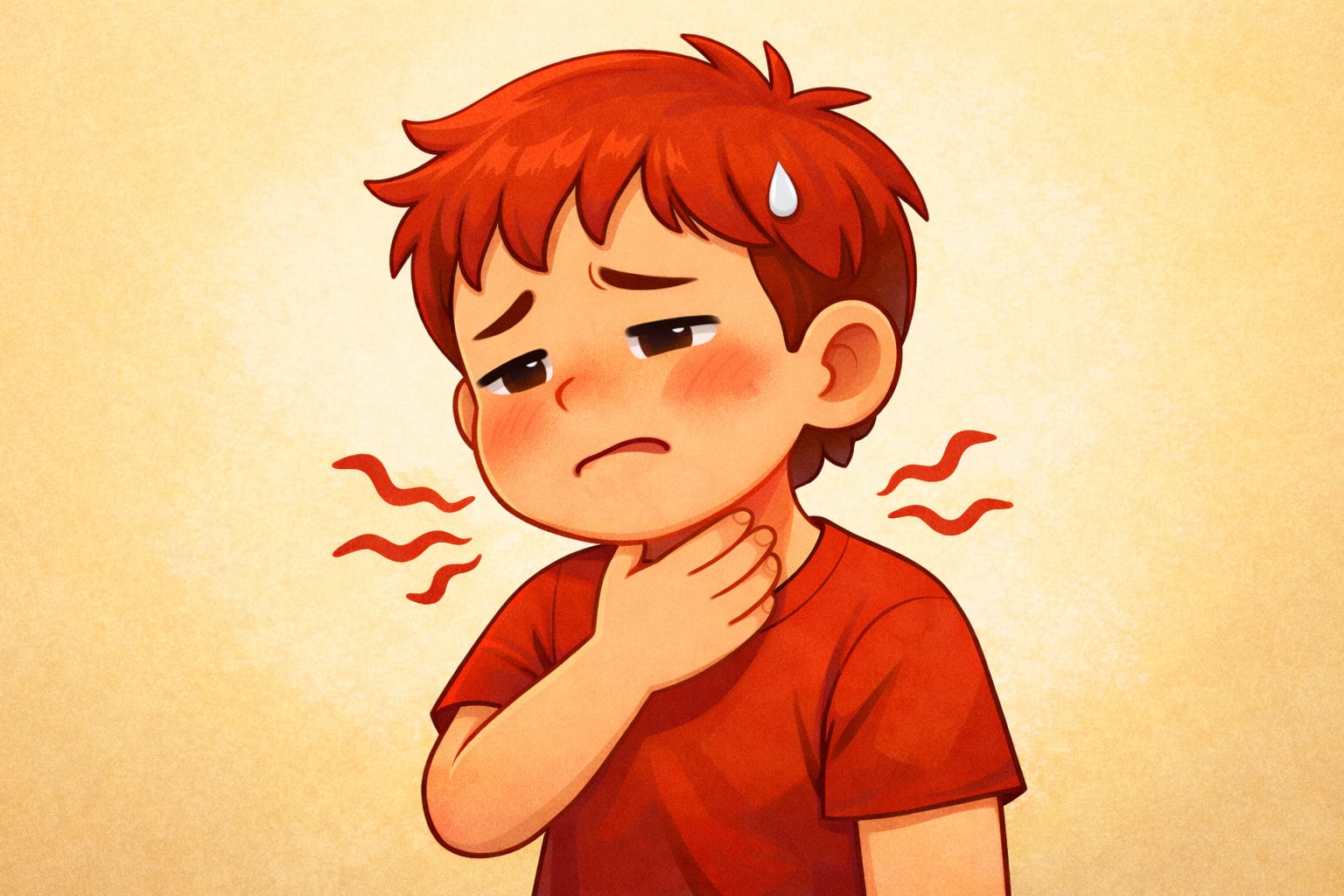
A sore throat can come on fast and feel pretty alarming- especially when it’s painful to swallow, comes with a fever, or doesn’t seem to improve. Many people immediately worry about strep throat, but not every sore throat is caused by a bacterial infection. Understanding the difference between strep throat and viral pharyngitis can help you know when it’s time to get checked.
Pharyngitis simply means inflammation of the throat, and most cases are caused by viruses. Viral sore throats often come with cough, runny nose, hoarseness, or congestion and usually improve on their own over several days. Strep throat, on the other hand, is caused by bacteria and tends to cause more severe throat pain, fever, swollen lymph nodes, and sometimes white patches on the tonsils—often without cough or cold symptoms.
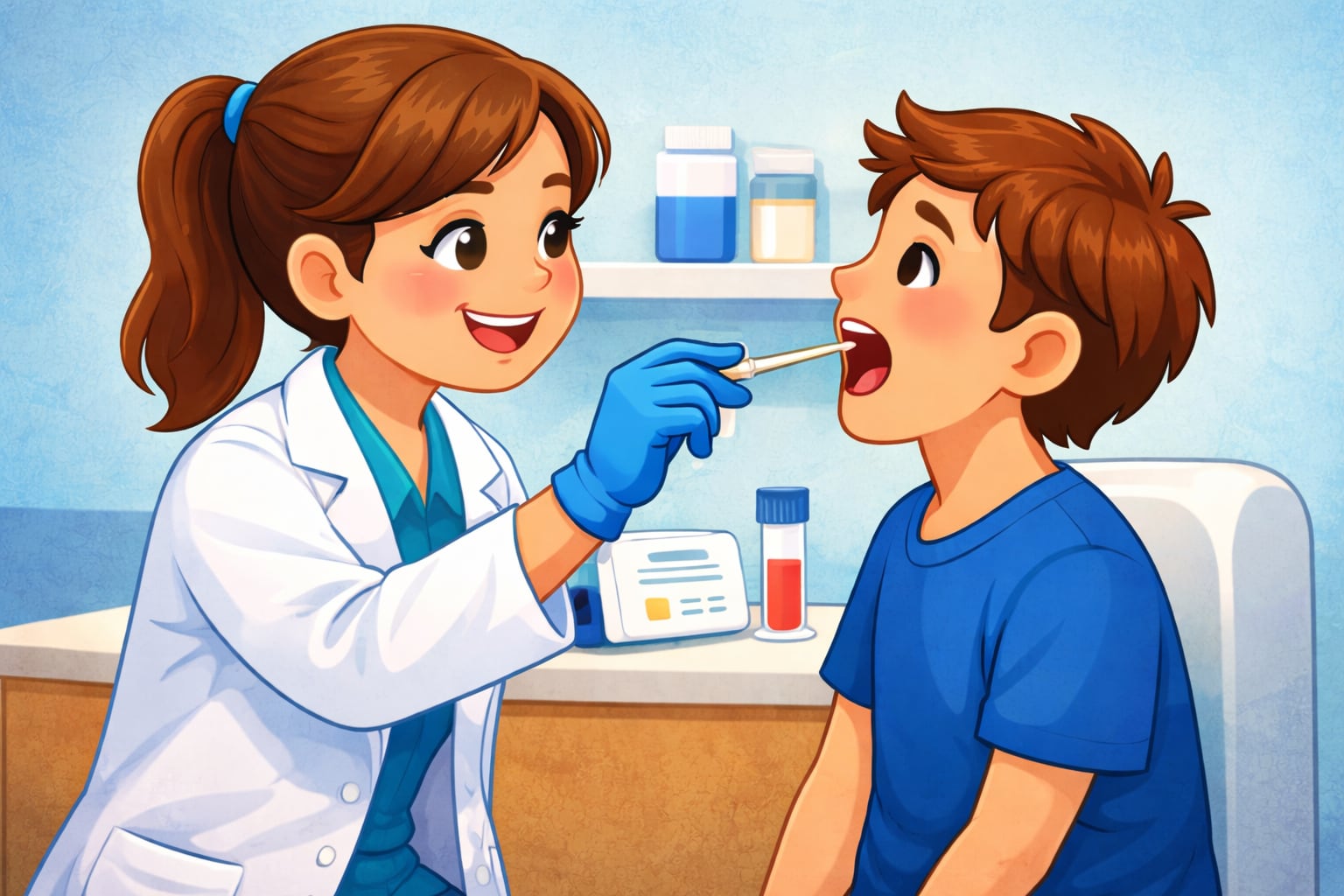
The tricky part is that symptoms can overlap, and even experienced clinicians can’t reliably tell the difference just by looking. That’s why testing matters. A rapid strep test can usually give results within minutes, and in some cases a throat culture may be sent to confirm the diagnosis. This helps ensure antibiotics are used only when they’re truly needed.
Treating strep throat promptly is important—not just to help you feel better faster, but also to prevent complications such as abscesses or rare inflammatory conditions. At the same time, avoiding unnecessary antibiotics for viral infections helps protect patients from side effects and antibiotic resistance. Even if you don’t need antibiotics, sometimes steroids can be used to reduce severe symptoms and pain.
If you or your child has a sore throat that’s severe, persistent, or accompanied by fever, headache, or swollen glands, an evaluation can provide peace of mind. Our clinic offers quick testing and same-visit treatment plans, so you’re not left guessing or waiting days for answers.