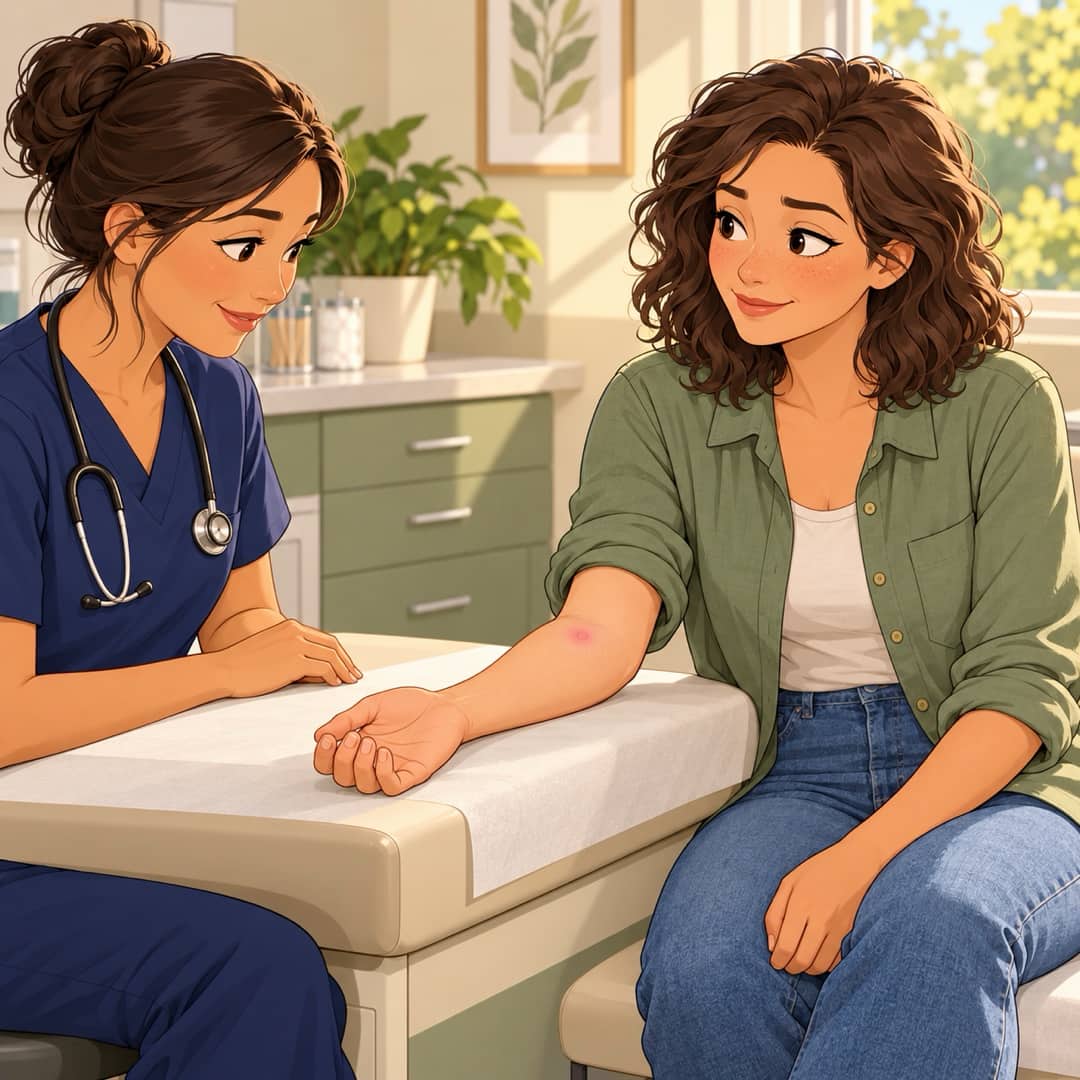

A backyard afternoon or walk outside can leave you with an unexpected souvenir. Most insect bites are minor, but watching how a spot changes can help you decide what to do next. You don’t need to identify the exact insect before asking for help.
Red and swollen doesn’t always mean infected
A bite can trigger a local inflammatory or allergic reaction. Redness, itching, and swelling that appear quickly after a bite are often part of that reaction rather than a bacterial infection. Some reactions can look surprisingly large.
That means a red bump doesn’t automatically need antibiotics. A clinician considers the timing, symptoms, and examination together. A photograph alone may not settle the question, and the size of the spot is only one part of the story.
What can I do at home?
For a mild bite when you otherwise feel well, gently wash the area with soap and water. Use a cold pack wrapped in a cloth to ease swelling, and try not to scratch. Scratching can break the skin and make infection more likely.
An over-the-counter anti-itch treatment may help. Ask a pharmacist which option is appropriate, especially for children, pregnancy, or use near the eyes. Follow the label rather than combining several products. A dated photo can help you describe changes accurately at a visit.
When should I get it checked?
Increasing pain, spreading redness, worsening warmth or swelling, or drainage deserves evaluation. Fever or feeling generally unwell is another reason to seek prompt care. Redness may be harder to see on darker skin, so changes in tenderness, warmth, and swelling matter too.
Seek same-day care if symptoms are worsening quickly, red streaks develop, or the bite is accompanied by fever. Bites near an eye or inside the mouth also need prompt advice. If you have a weakened immune system, contact your clinician early rather than waiting for a spot to become severe.
What if it was a tick?
Tick bites deserve their own follow-up. Remove an attached tick promptly using fine-tipped tweezers, grasping close to the skin and pulling steadily upward. Avoid heat, petroleum jelly, and other remedies intended to make it detach.
If a rash or fever develops in the following days or weeks, tell your clinician about the bite, when it happened, and where you were. Don’t wait for a classic bull’s-eye rash before asking for advice.
When is it an emergency?
Trouble breathing, swelling of the tongue or throat, or fainting after a bite or sting can signal a serious allergic reaction. Call 911. If you have a prescribed epinephrine device, use it as directed while emergency help is on the way.
At Watkinsville Urgent Care, we can examine a concerning bite or skin change and discuss whether it needs symptom relief, treatment for infection, or another level of care. Bring the timeline—and any photos showing how it has changed—to help us understand what’s happening.
References
- NHS: Insect bites and stings.
- NICE: Insect bites and stings: antimicrobial prescribing.
- American Academy of Dermatology: Tips to prevent and treat bug bites.
- CDC: What to do after a tick bite.
- Watkinsville Urgent Care: Services.