A splash of hot coffee. A brush against a baking sheet. It only takes a second to get burned—but how do you know whether home care is enough?
Start with cooling
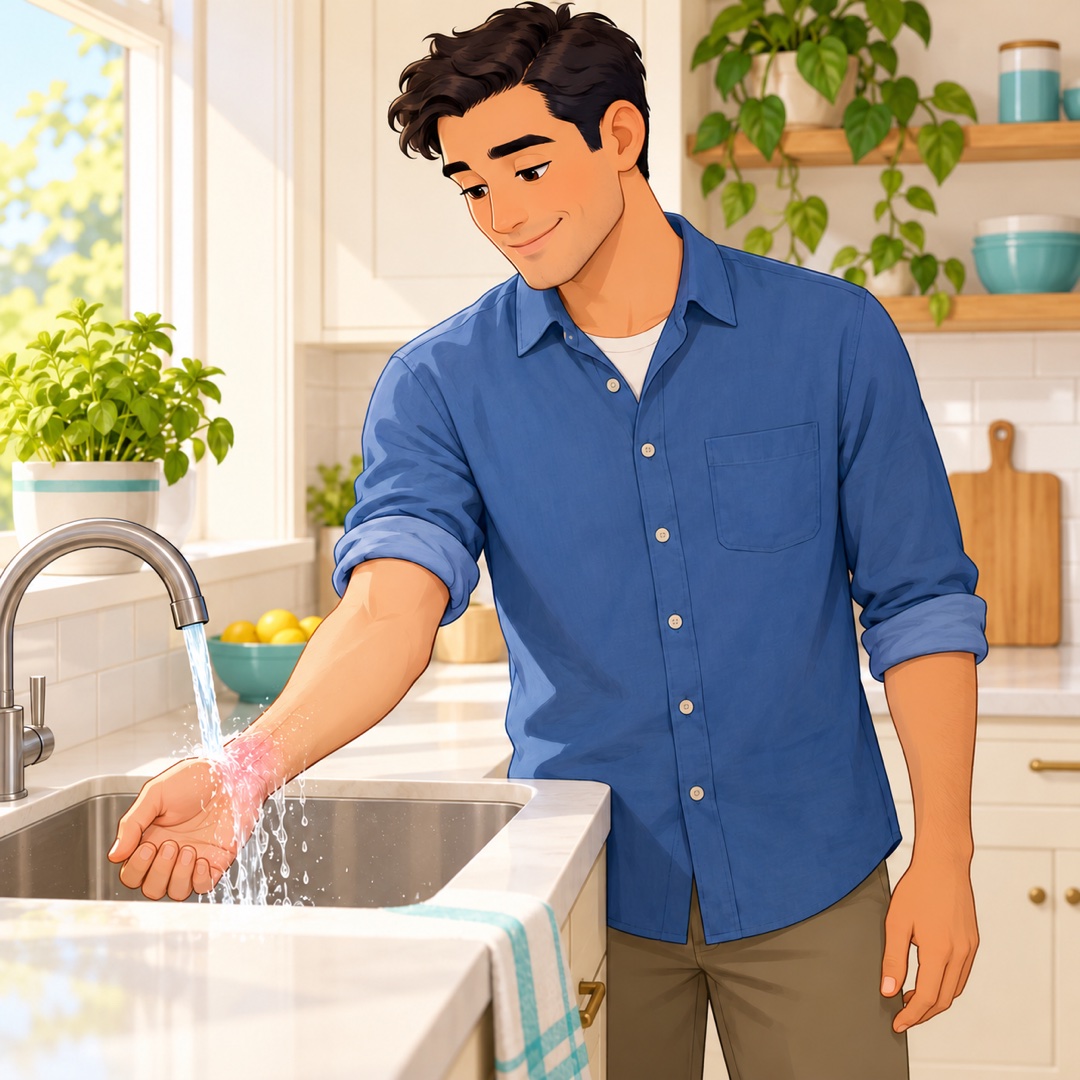
First, move away from the heat source. Hold the affected area under cool running water for 20 minutes as soon as possible. Keep the rest of your body warm, especially when helping a child. Remove rings, watches, or nearby clothing before swelling starts, but leave anything stuck to the skin in place.
Skip ice, butter, and toothpaste. These aren’t substitutes for cooling and appropriate wound care. Once cooled, protect the area with a clean, nonstick dressing. You can use vaseline if needed to keep dressings from sticking. Avoid putting adhesive directly on injured skin, and don’t wrap anything tightly around a limb.
What can usually be cared for at home?
A small, superficial burn affects the outermost skin layer. It may look red and feel tender, with mild swelling. Many of these burns heal with simple care, but size alone doesn’t tell the whole story. Where the burn is and how it happened also matter.
For a clearly minor, superficial burn, after cooling, a thin layer of plain petroleum jelly and a sterile nonstick bandage can protect the skin. Acetaminophen or ibuprofen may help discomfort if you can take them safely; follow the label. Ask a pharmacist if you’re unsure about interactions or whether a medicine is appropriate for your child.
Don’t pop blisters. A blister means more than the very top skin layer may be involved and may warrant medical evaluation. Large blisters are often unroofed in a medical setting after careful skin preparation to reduce the chances of infection.
When should I get it checked?
Seek prompt evaluation for blistering, poorly controlled pain, or a burn that is difficult to keep clean and covered. Burns involving the hands, feet, or a joint deserve particular attention because healing can affect movement. Children and people with other health conditions may need a lower threshold for assessment.
A clinician can assess the injury and decide whether specialist care is needed. Tell them what caused the burn and when it happened. Bring your tetanus vaccination history if available; burns may require a vaccination update depending on your previous doses.
Watkinsville Urgent Care offers wound care and tetanus boosters. Our team is trained and experience in caring for burns and minor wounds. We can help evaluate for deeper injury, infection, or other complications. If you need referral to a wound clinic for a higher level of care we can help arrange that as well.
References