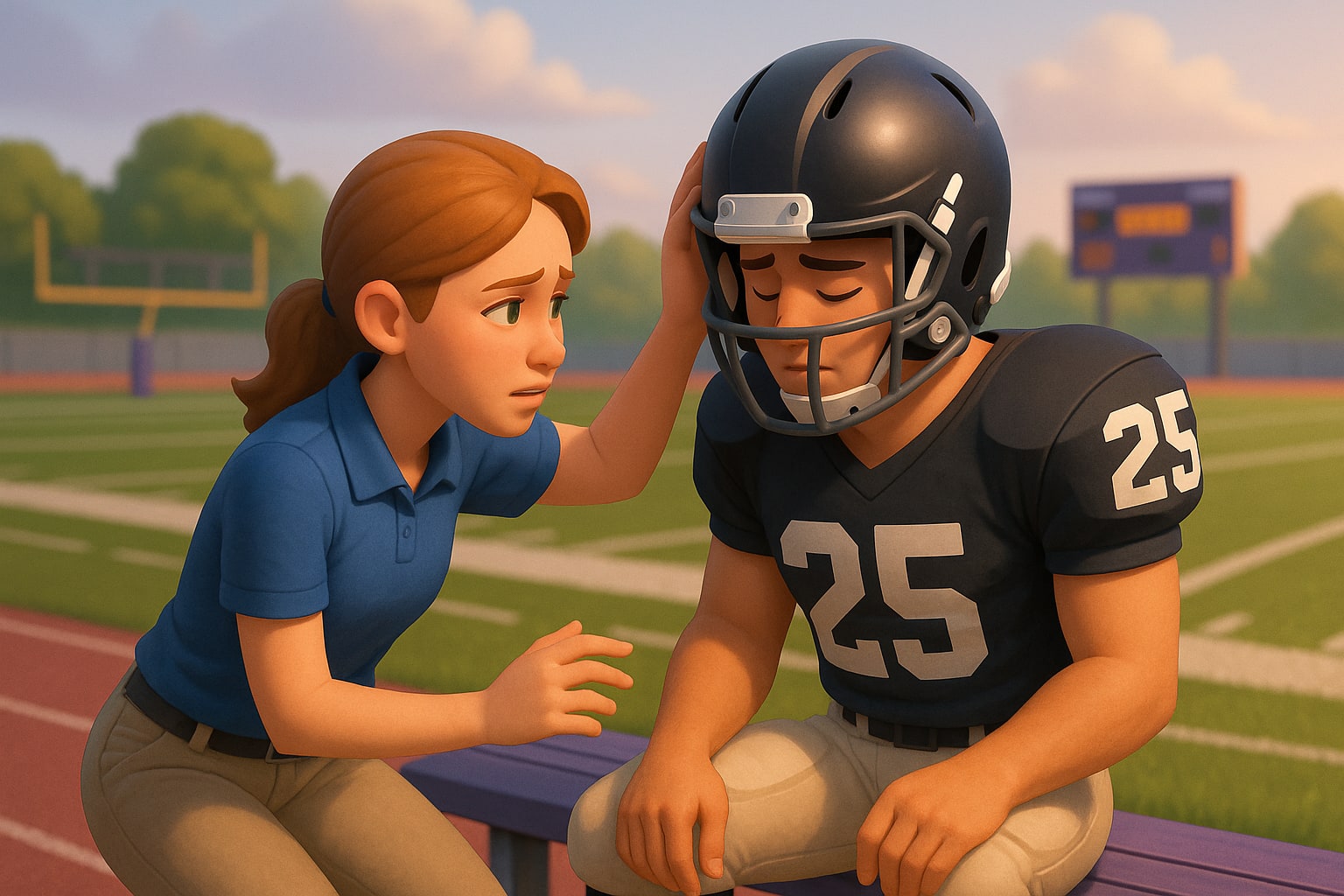
UPDATED August, 2026: With football season about to start, the question about concussions frequently comes up after a significant blow to the head or when a player complains of a headache. For good reason, coaches, parents and players are more aware of these injuries and their potential side effects. Everyone knows the effects can be serious if not properly addressed, but how do you really know if it’s a concussion? Also, as our understanding of concussions, recovery, and treatment has changed over the years it’s important to know your child is getting the best possible care for their injury.
First, it’s important to understand that a concussion is a clinical diagnosis. There’s no single test or imaging scan that confirms it. Instead, trained medical professionals rely on a careful exam and evaluation to recognize signs and symptoms. That’s why it’s so critical for any athlete who suffers a blow to the head — or exhibits symptoms like confusion, dizziness, or headache — to be evaluated properly. Younger children may exhibit different symptoms, such as irritability, trouble sleeping, or other behavioral changes after a head injury. A concussion isn’t always a result of a direct blow to the head, either. Any kind of sudden direction change can lead to internal rotational forces on the brain that lead to concussions.
Once a concussion is diagnosed, the next steps are vitally important. The traditional treatment previously included prolonged rest, often away from school and other activities, in a dark quiet environment. Current recommendations include returning to school and other normal everyday activities after 1-2 days but with careful coordination between teachers, school nurses, and parents to monitor for signs of worsening. It is still recommended to limit screen exposure and to avoid overly strenuous mental activities. Concussions often have marked effects on the overall mental health of children and a faster return to normal activities can help prevent those complications.
The biggest risk after a concussion is another head injury before they have completely recovered. Athletes should only return to play after being cleared by someone properly trained in concussion management- including adhering to a formal 6 step recovery process. Returning too soon can result in longer recovery times or, worse, serious long-term consequences for brain health. This is especially true for children and adolescents, whose brains are still developing and are more vulnerable to the physiologic changes associated with brain injury.
If you suspect a concussion- even if you’re not sure- it’s better to be sure than to risk additional injury. At Watkinsville Urgent Care, we take concussions seriously. Our staff is trained in the evaluation, treatment, and safe return-to-play clearance of young athletes. We’re here to help guide your child’s recovery safely and confidently.
Some useful links: