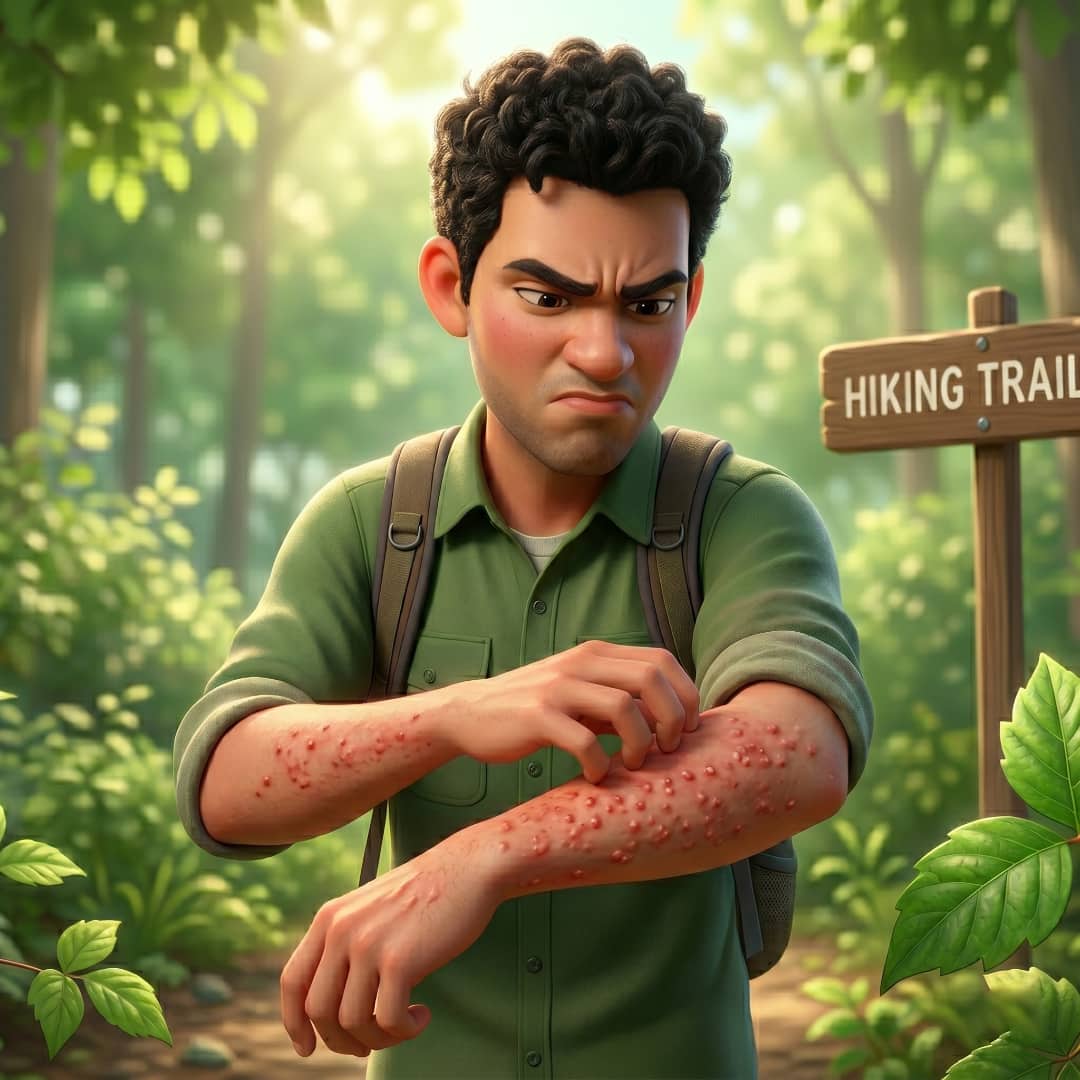
That beautiful afternoon spent gardening, hiking, or clearing brush can quickly turn into a miserable, itchy nightmare. If you’ve ever brushed past the wrong plant, you know exactly how fast a pleasant day outdoors can turn into an uncomfortable waiting game for your skin.
When your skin comes into contact with poison ivy, oak, or sumac, you are dealing with a condition known as allergic contact dermatitis. This red, itchy rash isn’t caused by the plant itself, but by an oily resin found in its leaves, stems, and roots called urushiol. Urushiol is incredibly sticky, easily transferring from the plant to your skin, clothing, gardening tools, and even your pet’s fur. Once it hitches a ride, it binds tightly to your skin cells, triggering an immune response that leads to blistering and intense itching, typically within 12 to 72 hours of exposure.
If you suspect you’ve just crossed paths with poison ivy, time is of the essence. Your first line of defense is to wash the area thoroughly within 20 to 30 minutes of exposure. Standard body washes often just spread the oil around, so it is highly recommended to use a specialized degreasing soap, dishwashing liquid, or a commercial poison ivy wash designed to break down tough plant oils. Be sure to use lukewarm water (hot water opens your pores and can let the oil sink in deeper) and scrub thoroughly, including under your fingernails. Don’t forget to throw all exposed clothing directly into the washing machine on a hot cycle.
While poison ivy is famous for causing outdoor rashes, it isn’t the only culprit waiting for you in the yard. Other common triggers for contact dermatitis include wild parsnip, giant hogweed, and even ordinary garden plants like chrysanthemums or certain ornamental grasses. Some people also experience localized reactions from micro-tears caused by prickly weeds or heavy pollen levels. Knowing what you are handling and wearing long sleeves, pants, and heavy-duty gloves when landscaping is your best shield against these hidden irritants.
Most mild cases of poison ivy can be safely managed at home with cool compresses, calamine lotion, and over-the-counter antihistamines or hydrocortisone creams to take the edge off the itch. It is also a myth that the fluid inside the blisters can spread the rash to other parts of your body or to other people; the rash only appears where the plant oil actually touched your skin, though it may break out at different times in different areas depending on how much oil was present.
At Watkinsville Urgent Care, we are always ready to help you find relief if home remedies aren’t cutting it. If your itching is severe, keeping you awake at night, or covering a large portion of your body, we can prescribe stronger topical or oral medications to calm your immune system down. More importantly, if you notice your rash becoming increasingly painful, oozing yellow pus, or swelling significantly, these are signs of a secondary bacterial infection from scratching that requires professional evaluation and antibiotic treatment. If you ever experience swelling around your face or lips, or have any difficulty breathing or swallowing, that is a true medical emergency, and you need to head directly to the ER.